
Trusted Stick Bugs Control Solutions Across Matthews and Charlotte
Stink Bugs in Charlotte, NC Identification & Control
Stink bugs swarm Charlotte-area homes every fall looking for a place to overwinter. Learn how to identify them, why they get inside, and how to keep them out.
Where Stink Bugs Come From
If you're seeing stink bugs, it's probably September or October and they're clustered on the sunny side of your house. Brown marmorated stink bugs are an invasive species that showed up in North Carolina in the mid-2000s, and every fall they go looking for somewhere warm to spend the winter; your siding, attic vents, window frames, and the gap under your storm door all qualify. They don't bite, they don't damage your house, and they won't reproduce indoors. What they will do is emerge on the first warm day of spring, one at a time, for weeks. Here's how to identify them, why they picked your home, and what actually stops them from getting in.
What Do Stink Bugs Look Like?
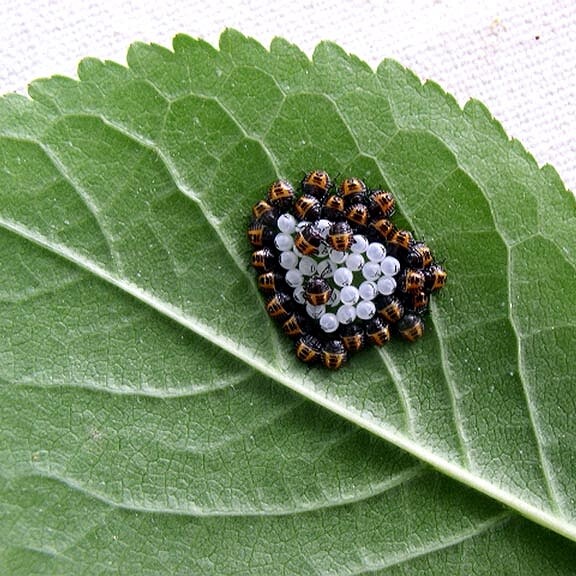
Stink bugs get their name from their tendency to release a repelling odor when crushed or disturbed. Stink bugs are shield-shaped, triangular and are about 5/8 inch long and 3/8 inch wide. Their upper body is in mottled shades of brown, gray or dark green and is covered with dense puncture marks. The underside is usually white, with gray or black markings and legs are brown with faint white banding. Their abdominal segments (banded with black and white) protrude from under their wings. Eggs of stink bugs are light green, barrel-shaped, and found in clusters.
Threats
Stink bugs pose a huge risk to plants and vegetation. They can be extremely harmful to the agricultural industry if they spread wildly throughout the country. Stink bugs do not hurt humans but can be a great nuisance because they are usually found in large numbers.
Want to learn more? NC State Extension is a great resource on the damage caused by these bugs.
How To Prevent Stink Bugs At The Home
If you find any sign of stink bugs in your yard, home or office, immediately contact Crown Pest for the best stink bug elimination treatment. Our specialists are adept at recognizing the species involved, the severity of the problem, and any potential threats. Our professionals will visit your premises and take the time to inspect the critical areas and typical habitats. Accordingly, they use the most advanced and the most-effective treatment to make your home, office and surroundings pest-free.
DIY Tips To Get Rid Of Stink Bugs
- Seal entryways of your home and fill cracks with caulk.
- Protect vents with a screen.
- Vacuum clean any stink bugs and dispose off the bag immediately.
- Spray your garden area with light insecticides.
- Clean up your garden regularly and remove weeds.
- Clean gutters and downspouts.
- Overwintering stink bugs are difficult to remove.
- Call Crown Pest team at 704-843-7465 for the most effective solution to deal with stink bugs.
How Crown Pest Keeps Stink Bugs Out
Here's the part most homeowners find out the hard way: once stink bugs are inside your walls, there is no spray that solves it. They tuck into wall voids, attic insulation, and the space behind soffits, and they stay there until spring. Treating the inside of your home does very little, and it isn't something we recommend.
What works is getting to them before they get in.
Stink bugs start looking for winter shelter in late August and keep at it through October. That window is when an exterior perimeter treatment does its job. We treat the surfaces they actually land on first: the sunny south and west walls, around window and door frames, soffits and eaves, attic and dryer vents, and the foundation line. Timing matters more than product here. A treatment applied in November, after they've already moved in, is a treatment applied too late.
Because that timing is so specific, stink bugs are a poor fit for one-time service. Our ongoing residential pest plan puts a technician at your home on a schedule that already lines up with the fall invasion, so the exterior barrier is refreshed before the pressure starts rather than after your kitchen ceiling light fills up. The same treatment handles the other pests that come indoors on the same cue in the Charlotte area: ladybugs, boxelder bugs, cluster flies, and spiders looking for somewhere warm.
We'll also walk the exterior and show you where they're getting in. Torn window screens, gaps around utility penetrations, unscreened attic vents, and worn door sweeps account for most of it, and sealing those is permanent in a way that no treatment is.
Serving Matthews, Waxhaw, Indian Trail, Mint Hill, Concord, and the greater Charlotte area.